From “what's wrong” to “who can fix it,” in one path.
3research methods
2seller personas
5home sellers tested
4design changes from testing
Problem
Sellers don't lose deals at the negotiating table. They lose them at the inspection.
In 7+ years of real estate I've watched the same moment again and again: an inspection report flags repairs nobody caught, and the seller starts negotiating from behind. As co-owner of an HVAC company, I also see the other side, where contractors get last minute calls they can't fit in before closing.
How might we help sellers know exactly what to fix, get it done fast, and walk into listing day ahead of the inspection instead of surprised by it?
Research
Three sides of the same deal.
Seller and agent interviewsOne on one conversations with recent home sellers and listing agents about what surprised them during prep and inspection.
Contractor conversationsHVAC, roofing and general contractors on how last minute seller repair requests play out on their end.
Secondary researchCommon inspection report findings and listing prep checklists, to see where expectations and reality split.
What we heardWhat the design does
Sellers can't tell which repairs actually move the needle with buyers.Each item is flagged by inspection risk, so cosmetic fixes and dealbreakers look different.
Once an inspection flags something, sellers are negotiating from behind.A room by room walkthrough surfaces issues weeks before the buyer's inspector does.
Lining up a contractor before closing is a scramble, not a plan.Flagged items lead straight to vetted contractors by trade, with quotes and booking.
Personas
Priya Patel, 34First time seller who outgrew her starter townhome
“I don't know what's actually going to scare a buyer off versus what's just paint.”
Wants to sell quickly and move up without leaving money on the table. Gets conflicting advice from friends, family, her agent and TV.
Marcus Reyes, 58Relocating seller, family home of 20 years
“I don't have six weeks to interview five different repair guys.”
Needs the house market ready in six weeks before a job move, with no time to vet and manage contractors himself.
Design
Four areas, one job.
Four areas keep the app focused on one job: getting from walkthrough to a readiness report the agent can share.
ListReady home
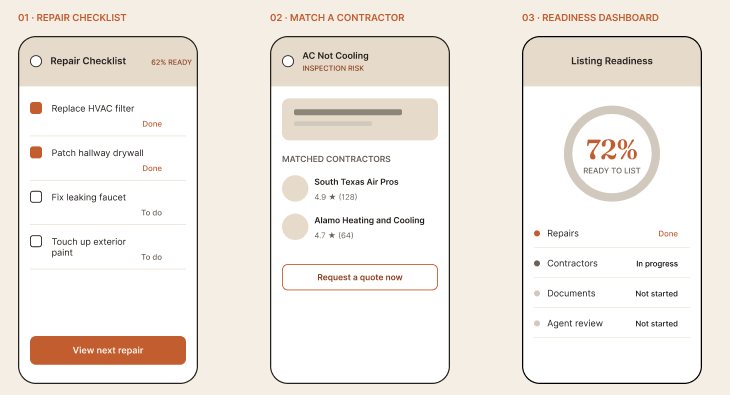
Repair checklistRoom by room walkthroughInspection risk flags
Contractor matchesVetted pros by tradeQuotes and scheduling
Progress trackerCompleted vs. outstandingReady to list status
Agent handoffShareable readiness report
User flow
Agent sends inviteThe day the listing agreement is signed.
Guided walkthroughThe seller checks each room from their phone.
Priority repairs flaggedWhat will trip an inspection vs. what can wait.
Match and bookCompare vetted contractors and book directly.
Ready to list sharedFinished repairs roll up into a status the agent shares.
From wireframe to UI
Low fidelity: three screens, one thread
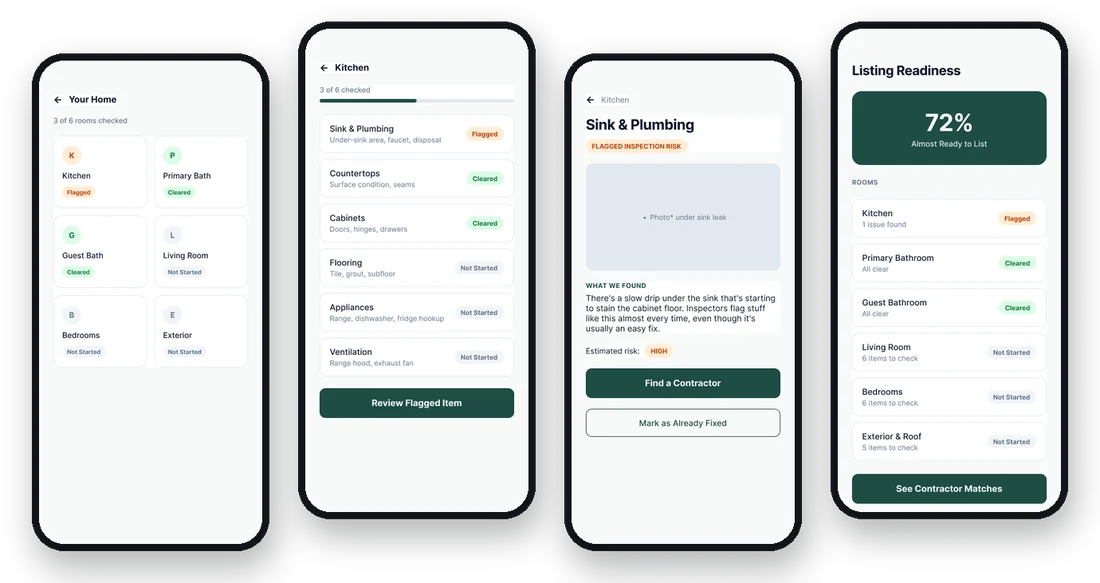
For the final screens I gave ListReady its own calm, trustworthy look: deep evergreen for actions, white cards, and a status system sellers can read at a glance.
FlaggedClearedNot startedColor always means status, never decoration.
Plain language over inspector jargon. Every flagged item has a “What we found” note written the way an agent would explain it at the kitchen table, plus an estimated risk level.
Testing
Five sellers, one guided path.
Tested with: 5 home sellersTasks: walk through a room, review flagged repairs, find a contractor
Sellers called it easy, simple, straight to the point, and way more convenient.
Sellers worked through the full path, from a room walkthrough to a flagged repair to a matched contractor. That confirmed the core idea: one guided path from “what's wrong” to “who can fix it” is what sellers were missing.
What I changed from testingWhy it helps sellers
Rooms overview first. The app opens on the whole house before any single room's checklist.Sellers see the size of the job and where problems are at a glance.
Plain language “What we found” notes with an estimated risk level on every flagged repair.No inspector jargon, so sellers understand why a repair matters.
“Mark as already fixed” on each repair.Work a seller already handled doesn't sit in their list as a false alarm.
Flagged, Cleared and Not started chips instead of Done and To do checkboxes.Status reads instantly, and color always means the same thing.
Results & next steps
What I'd do next.
Measure the winTrack time from first walkthrough to ready to list, and how many flagged items get fixed before the inspection.
Prototype the core flowWalkthrough, flag, match and track, clickable for usability testing.
Pressure test with agentsSit down with agents, including my own team, on where this fits their workflow.